How It Works

Three steps to never overpay
DealJudge analyzes used car deals and gives you the information you need to negotiate with confidence.
DealJudge analyzes used car deals and gives you the information you need to negotiate with confidence.
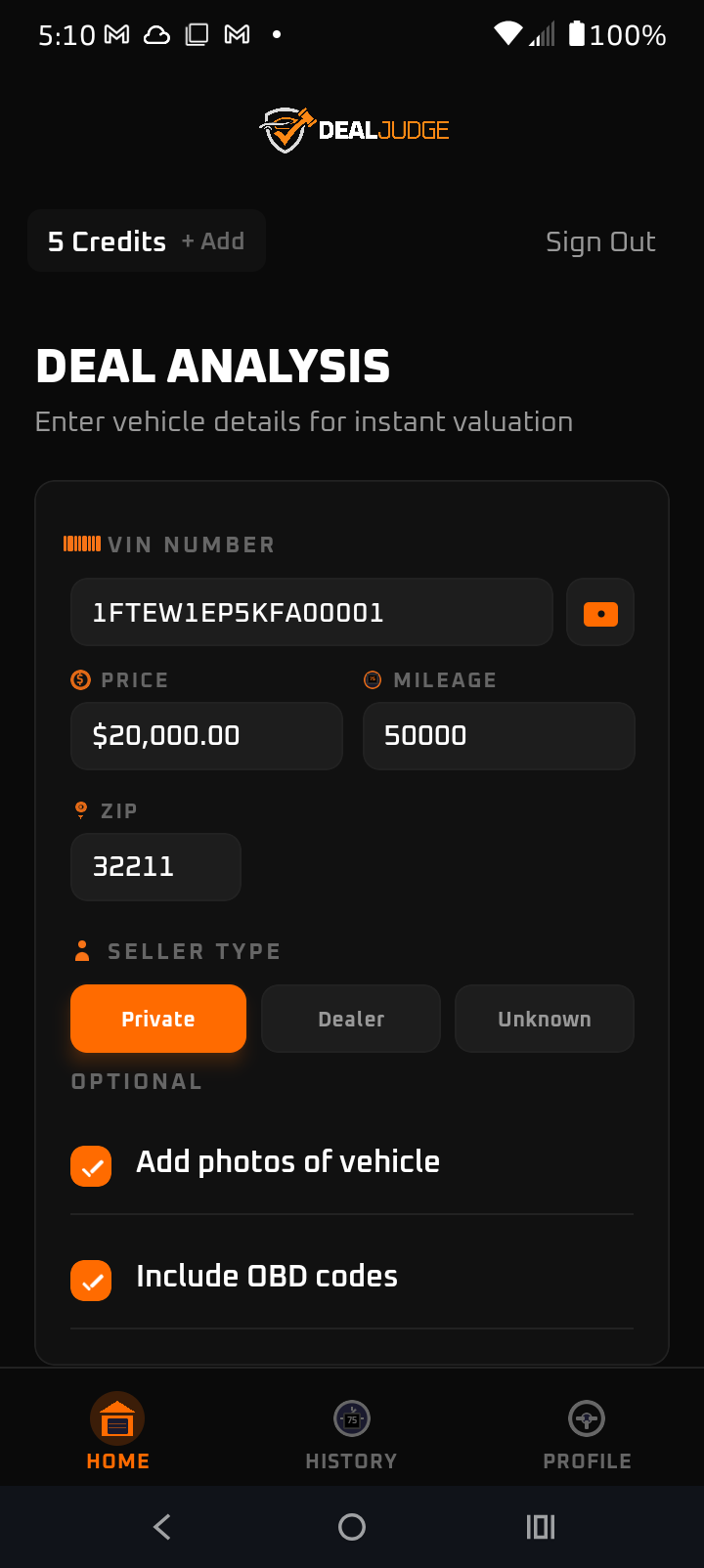
VIN, asking price, mileage, and your zip code. Takes about 30 seconds.
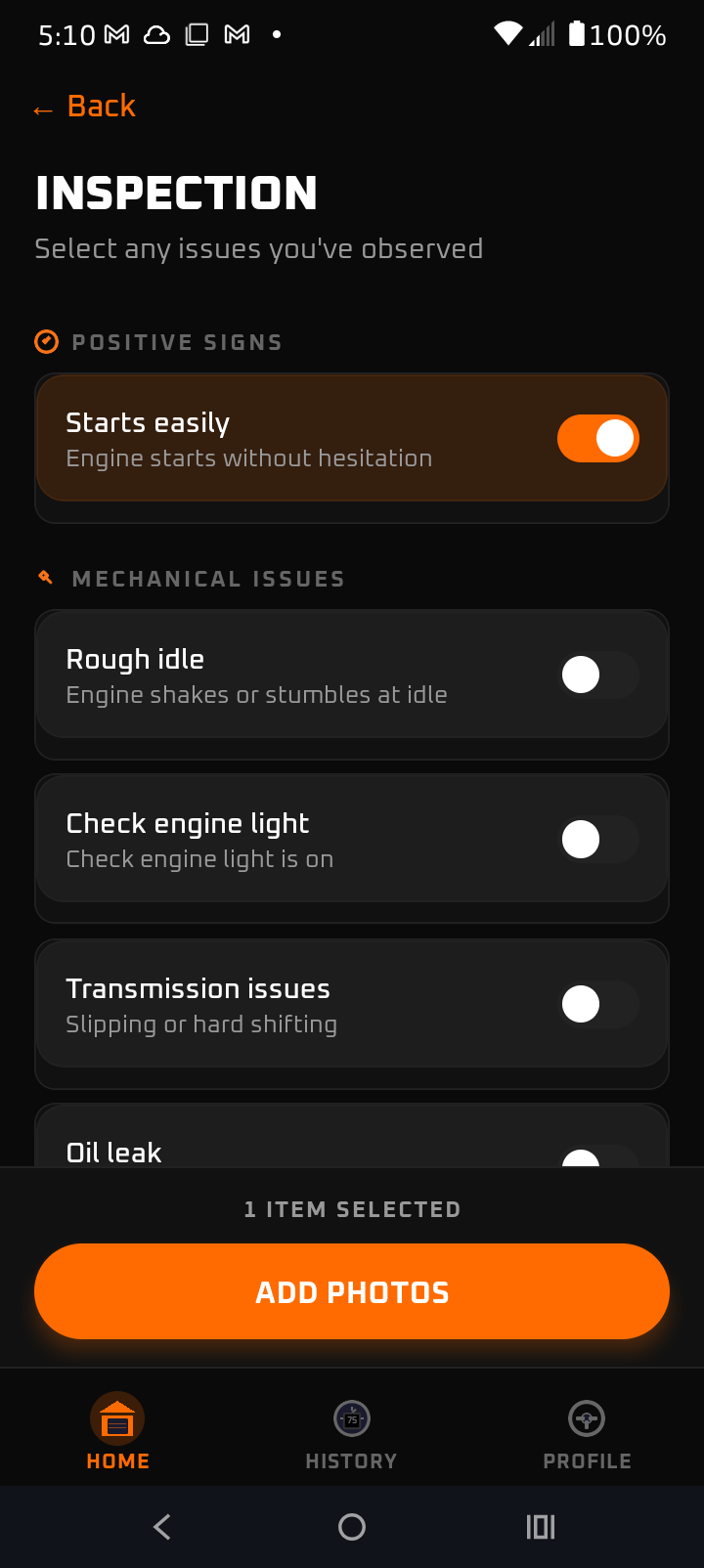
Log what you see during the test drive. Every observation adjusts your deal analysis.
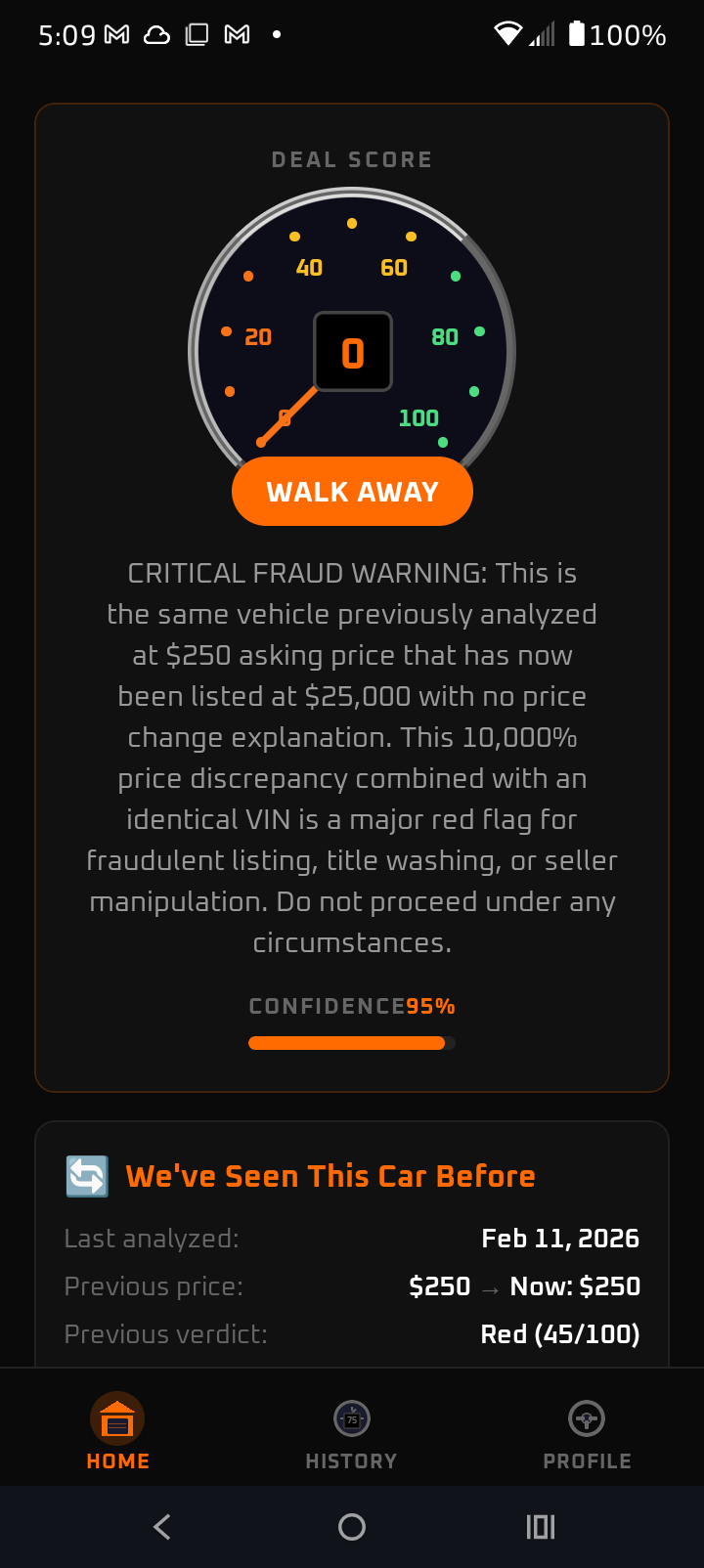
Deal Score, fair price range, repair forecasts, risk flags, and negotiation scripts — all in one report.
Most car pricing tools give you a number and leave you on your own. Kelley Blue Book tells you a car is worth $18,000-$21,000. Great — but which end of that range should you offer? What if the car has a check engine light? What about the worn brake pads you noticed during the test drive?
DealJudge factors in everything you observe during your inspection. Worn tires, oil leaks, dashboard warning lights, dents, rust, OBD-II trouble codes — each observation adjusts your repair forecast and changes the numbers in your negotiation scripts. The result is a deal analysis built around the actual car in front of you, not a generic model-year average.
Your analysis includes a Deal Score from 0 to 100 that weighs price fairness, risk signals, condition and repair burden, and data confidence. A score above 70 means the deal is strong. Between 40 and 70, you should negotiate. Below 40, walk away unless the seller comes down significantly.
The negotiation scripts aren't templates. They reference the specific vehicle, the specific issues you found, and the specific price gap between asking and fair market value. Copy, paste, and send — whether you're texting a private seller or emailing a dealership.
NHTSA (National Highway Traffic Safety Administration) — We check for open safety recalls, crash test ratings, and consumer complaints filed against the make, model, and year. Recalls are free to fix at any dealer, but only if you know about them.
Market Pricing Data — Real-time comparison against active listings in your area. We look at what similar vehicles are actually selling for, not just what sellers are asking. Your fair price range accounts for mileage, condition, trim, and local demand.
Vehicle History — Our free VIN check decodes the vehicle's factory specifications, origin country, engine type, and trim level. We cross-reference this against what the seller claims to catch discrepancies.
Repair Cost Intelligence — Over 20 observation types mapped to likely and worst-case repair costs. When you enter an OBD-II code like P0420, we know the range runs from a loose gas cap ($0) to a catalytic converter replacement ($1,500-$3,000).
First analysis free — no account needed. Then $4.99/month for unlimited analyses.